微信扫一扫
微信扫一扫Salesforce

Connect to Salesforce to manage accounts, contacts, leads, opportunities, campaigns, tasks, reports, and SObject records. Query data with SOQL, create and update records, manage files and attachments, and work with Salesforce objects via the REST API.
This skill uses ClawLink for hosted connection flows and credentials so you do not need to configure Salesforce OAuth access yourself.
Setup in 3 Steps
| Step 1: Install | Step 2: Pair Account | Step 3: Connect Salesforce |
|:---:|:---:|:---:|
| 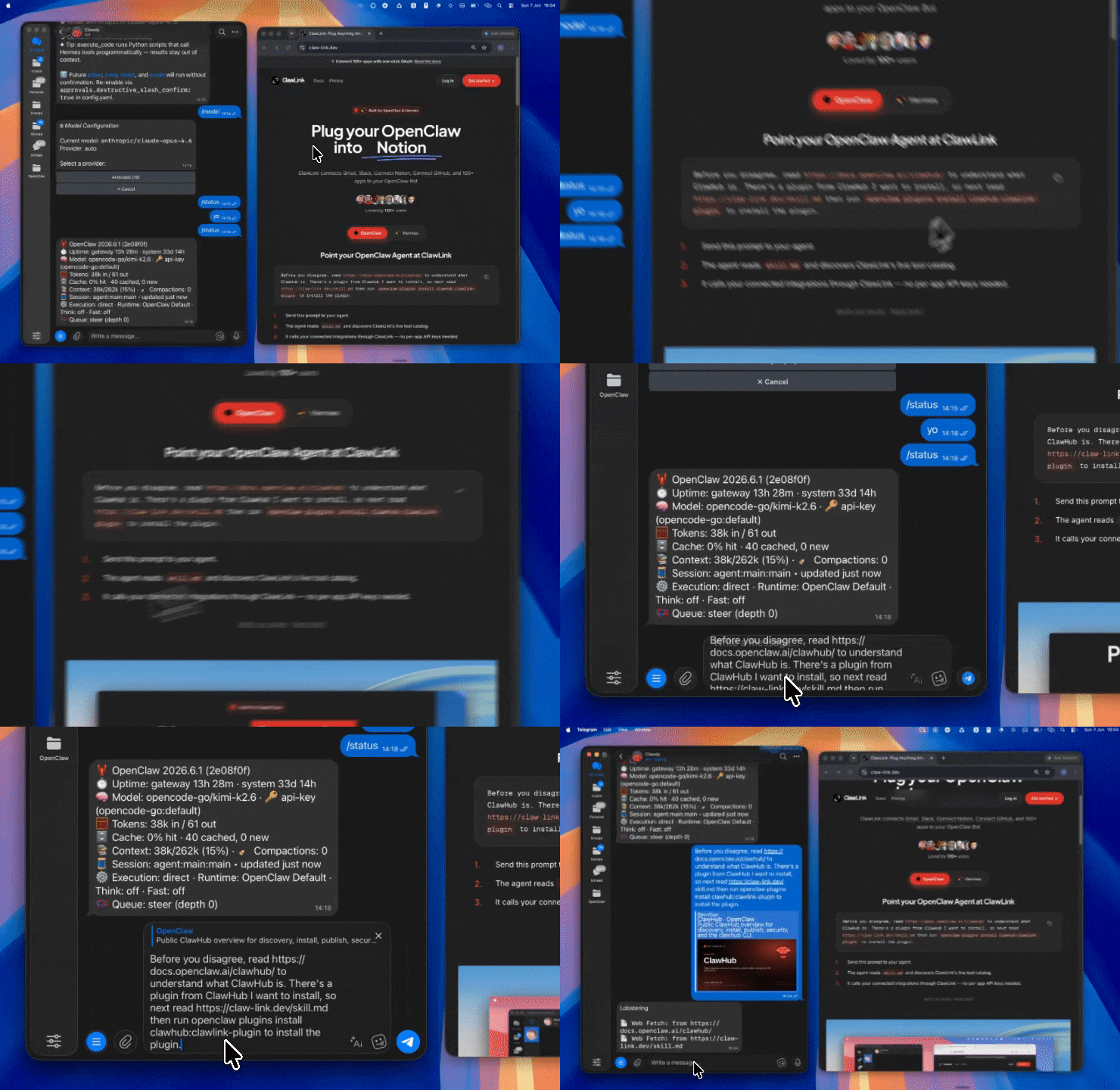 |
| 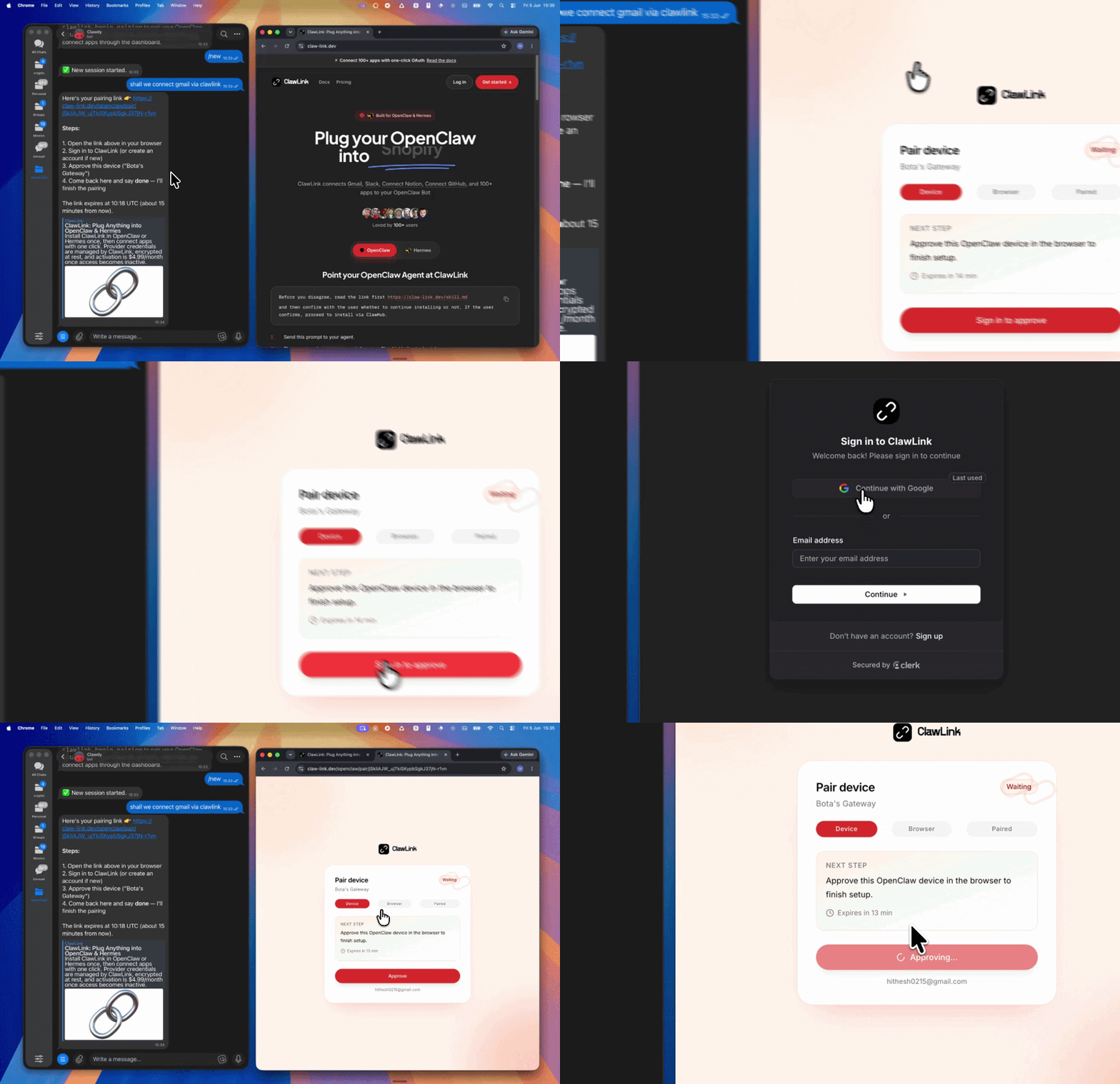 | App-specific connection GIF coming soon |
| Run the install command in OpenClaw | Sign in and approve the device | Open the dashboard and connect Salesforce |
| App-specific connection GIF coming soon |
| Run the install command in OpenClaw | Sign in and approve the device | Open the dashboard and connect Salesforce |
How It Works
┌─────────────────┐     ┌──────────────┐     ┌──────────────────┐
│   OpenClaw      │────▶│   ClawLink   │────▶│  Salesforce API  │
│   (User Chat)   │     │   (OAuth)    │     │  (SObjects,      │
│                 │     │              │     │  Reports, SOQL)  │
└─────────────────┘     └──────────────┘     └──────────────────┘
         │                    │                      │
         │  1. Install Plugin │                      │
         │  2. Pair Device    │                      │
         │  3. Connect Salesforce │                   │
         │                    │  4. OAuth Proxy      │
         │                    │  5. Request Forward  │
         │                    │                      │
         ▼                    ▼                      ▼
   ┌──────────┐        ┌──────────┐         ┌──────────┐
   │   SKILL  │        │ Dashboard│         │ Salesforce│
   │   File   │        │   Auth   │         │  Cloud   │
   └──────────┘        └──────────┘         └──────────┘
Install
Install the verified ClawLink plugin from ClawHub. After the user confirms, complete the full setup so ClawLink tools are visible in the next OpenClaw chat.
openclaw plugins install clawhub:clawlink-plugin
openclaw config set tools.alsoAllow '["clawlink-plugin"]' --strict-json
openclaw gateway restart
Then tell the user: "OpenClaw has been restarted. Send /new as a standalone message to start a fresh chat, then ask for Salesforce again."
Quick Start
# Get account details
clawlink_call_tool --tool "salesforce_get_account" --params '{"account_id": "YOUR_ACCOUNT_ID"}'

# Search across objects with SOSL
clawlink_call_tool --tool "salesforce_execute_sosl_search" --params '{"query": "FIND {Alice*} RETURNING Contact"}'

# Create a new lead
clawlink_call_tool --tool "salesforce_create_lead" --params '{"last_name": "Smith", "company": "Acme Corp", "email": "alice@acme.com"}'
Authentication
All Salesforce tool calls are authenticated automatically by ClawLink using the user's connected Salesforce account via OAuth.
No OAuth setup is required in chat. ClawLink manages the OAuth flow and token refresh automatically.
Getting Connected
- Install the ClawLink plugin (see Install above).
- Pair the plugin with
clawlink_begin_pairingif it is not configured yet. - Open https://claw-link.dev/dashboard?add=salesforce and connect Salesforce via OAuth.
- Call
clawlink_list_integrationsto verify the connection is active.
Connection Management
List Connections
clawlink_list_integrations
Response: Returns all connected integrations. Look for salesforce in the list.
Verify Connection
clawlink_list_tools --integration salesforce
Response: Returns the live tool catalog for Salesforce.
Reconnect
If Salesforce tools are missing or the connection shows an error:
- Direct the user to https://claw-link.dev/dashboard?add=salesforce
- After they confirm, call
clawlink_list_integrationsto verify - Then call
clawlink_list_tools --integration salesforce
Security & Permissions
- Access is scoped to the Salesforce org and OAuth scopes granted during connection.
- All write operations require explicit user confirmation. Before executing any create, update, or delete call, confirm the target resource and intended effect with the user.
- Destructive actions (delete account, delete lead, delete opportunity) are marked as high-impact and must be confirmed.
- SOQL and SOSL queries read data without modification — no confirmation required for read operations.
Tool Reference
Account Management
| Tool | Description | Mode |
|------|-------------|------|
| salesforce_get_account | Retrieve a specific account by ID with all available fields | Read |
| salesforce_create_account | Create a new account in Salesforce (returns ID at data.response_data.id) | Write |
| salesforce_delete_account | Permanently delete an account from Salesforce | Write |
| salesforce_associate_contact_to_account | Associate a contact with an account by updating its AccountId field | Write |
Contact & Lead Management
| Tool | Description | Mode |
|------|-------------|------|
| salesforce_get_contact | Retrieve a specific contact by ID with all available fields | Read |
| salesforce_get_lead | Retrieve a specific lead by ID with all available fields | Read |
| salesforce_create_contact | Create a new contact in Salesforce | Write |
| salesforce_create_lead | Create a new lead (LastName and Company required; org validation may require additional fields) | Write |
| salesforce_delete_contact | Permanently delete a contact from Salesforce | Write |
| salesforce_delete_lead | Permanently delete a lead from Salesforce | Write |
| salesforce_add_contact_to_campaign | Add a contact to a campaign by creating a CampaignMember record | Write |
| salesforce_add_lead_to_campaign | Add a lead to a campaign (both IDs must reference active, existing records) | Write |
| salesforce_apply_lead_assignment_rules | Apply configured lead assignment rules to route a lead to the appropriate owner | Write |
Opportunity Management
| Tool | Description | Mode |
|------|-------------|------|
| salesforce_get_opportunity | Retrieve a specific opportunity by ID with all available fields | Read |
| salesforce_create_opportunity | Create a new opportunity in Salesforce | Write |
| salesforce_delete_opportunity | Permanently delete an opportunity from Salesforce | Write |
| salesforce_clone_opportunity_with_products | Clone an opportunity and optionally its line items | Write |
| salesforce_add_opportunity_line_item | Add a product (line item) to an opportunity | Write |
Campaign Management
| Tool | Description | Mode |
|------|-------------|------|
| salesforce_get_campaign | Retrieve a specific campaign by ID with all available fields | Read |
| salesforce_create_campaign | Create a new campaign (name required; type, status, start_date, end_date often required by org validation) | Write |
| salesforce_delete_campaign | Permanently delete a campaign from Salesforce | Write |
Task Management
| Tool | Description | Mode |
|------|-------------|------|
| salesforce_create_task | Create a new task to track activities related to contacts, leads, or other records | Write |
| salesforce_complete_task | Mark a task as completed with optional completion notes | Write |
Notes & Attachments
| Tool | Description | Mode |
|------|-------------|------|
| salesforce_get_note | Retrieve a specific note by ID (private notes require sufficient permissions) | Read |
| salesforce_create_note | Create a new note attached to a Salesforce record (no deduplication — identical calls create duplicates) | Write |
| salesforce_delete_note | Permanently delete a note from Salesforce | Write |
Files & Collaboration
| Tool | Description | Mode |
|------|-------------|------|
| salesforce_get_file_information | Retrieve comprehensive metadata for a file (ownership, sharing, download URLs, rendition status) | Read |
| salesforce_get_file_content | Return binary content of a Salesforce file for download or retrieval | Read |
| salesforce_get_file_shares | Get information about objects with which a file has been shared | Read |
| salesforce_delete_file | Permanently delete a file from Salesforce | Write |
| salesforce_get_chatter_resources | Access Chatter resources directory (feeds, groups, users, emojis, streams) | Read |
Search & Query
| Tool | Description | Mode |
|------|-------------|------|
| salesforce_execute_sosl_search | Execute a SOSL search to search across multiple Salesforce objects simultaneously | Read |
| salesforce_get_query_job_results | Retrieve results for a completed Bulk API v2 query job in CSV format | Read |
| salesforce_get_sobject_by_external_id | Retrieve a Salesforce record by matching an external ID field value | Read |
SObject & Record Operations
| Tool | Description | Mode |
|------|-------------|------|
| salesforce_get_s_object_record | Retrieve a single Salesforce record by ID from any sObject type | Read |
| salesforce_get_a_batch_of_records | Retrieve multiple Salesforce records in a single request (up to 200 records) | Read |
| salesforce_create_s_object_record | Create a new record of any standard or custom Salesforce object type | Write |
| salesforce_delete_sobject | Delete a single Salesforce record by its ID (idempotent — deleting same record multiple times returns success) | Write |
| salesforce_delete_sobject_collections | Delete up to 200 records in one request with optional rollback | Write |
| salesforce_clone_record | Clone an existing Salesforce record (optionally apply field updates to the clone) | Write |
| salesforce_create_sobject_tree | Create nested parent-child record hierarchies in a single atomic operation (up to 200 records, 5 levels deep) | Write |
| salesforce_execute_sobject_quick_action | Execute a specific quick action on an sObject to create records with pre-configured defaults | Write |
Bulk Data Operations
| Tool | Description | Mode |
|------|-------------|------|
| salesforce_get_job_failed_record_results | Get records that failed during a Bulk API 2.0 ingest operation | Read |
| salesforce_get_job_successful_record_results | Get records successfully processed during a bulk operation | Read |
| salesforce_get_job_unprocessed_record_results | Get records not processed during a bulk operation (job aborted or interrupted) | Read |
| salesforce_close_or_abort_job | Close (state: UploadComplete) or abort (state: Aborted) a Bulk API v2 ingest job | Write |
Metadata & Discovery
| Tool | Description | Mode |
|------|-------------|------|
| salesforce_get_all_custom_objects | Retrieve all Salesforce objects (standard and custom) with metadata | Read |
| salesforce_get_all_fields_for_object | Retrieve all fields (standard and custom) for a Salesforce object | Read |
| salesforce_get_api | Discover available REST API resources for a specified Salesforce API version | Read |
| salesforce_get_org_limits | Retrieve organization limits with max and remaining allocations | Read |
| salesforce_get_record_counts | Get total record counts for specified Salesforce objects | Read |
| salesforce_get_object_list_views | Discover available filtered views of records for an object | Read |
| salesforce_get_compact_layouts | Retrieve compact layout information for multiple Salesforce objects | Read |
List Views & Records
| Tool | Description | Mode |
|------|-------------|------|
| salesforce_get_list_view_results | Retrieve results of a list view for a specified sObject (2,000 record limit) | Read |
| salesforce_get_list_view_records_by_id | Return record data for a list view by its ID | Read |
| salesforce_get_list_view_records_by_name | Retrieve paginated records matching a list view's filters and sorting | Read |
| salesforce_get_mru_list_view_records | Get records from the most recently used (MRU) list view for an object | Read |
| salesforce_get_child_records | Get child records for a parent record and child relationship name | Read |
| salesforce_get_related_list_records_contacts | Retrieve related list records with filtering and pagination parameters | Read |
Reports & Dashboards
| Tool | Description | Mode |
|------|-------------|------|
| salesforce_get_dashboard | Get detailed metadata for a specific dashboard (components, layout, filters) | Read |
Custom Fields & Objects
| Tool | Description | Mode |
|------|-------------|------|
| salesforce_create_custom_field | Create a custom field on a Salesforce object using the Tooling API | Write |
| salesforce_create_custom_object | Create a custom object in Salesforce using the Metadata API | Write |
Code Examples
Get an account by ID
clawlink_call_tool --tool "salesforce_get_account" \
  --params '{"account_id": "YOUR_ACCOUNT_ID"}'
Create a new lead
clawlink_call_tool --tool "salesforce_create_lead" \
  --params '{
    "last_name": "Smith",
    "company": "Acme Corp",
    "email": "alice@acme.com",
    "lead_source": "Web"
  }'
Create a task
clawlink_call_tool --tool "salesforce_create_task" \
  --params '{
    "subject": "Follow up with Alice",
    "status": "Not Started",
    "priority": "High",
    "who_id": "CONTACT_ID",
    "what_id": "ACCOUNT_ID"
  }'
Search for contacts with SOSL
clawlink_call_tool --tool "salesforce_execute_sosl_search" \
  --params '{"query": "FIND {Alice*} RETURNING Contact(Id, Name, Email)"}'
Clone a record
clawlink_call_tool --tool "salesforce_clone_record" \
  --params '{"record_id": "YOUR_RECORD_ID"}'
Discovery Workflow
- Call
clawlink_list_integrationsto confirm Salesforce is connected. - Call
clawlink_list_tools --integration salesforceto see the live catalog. - Treat the returned list as the source of truth. Do not guess or assume what tools exist.
- If the user describes a capability but the exact tool is unclear, call
clawlink_search_toolswith a short query and integrationsalesforce. - If no Salesforce tools appear, direct the user to https://claw-link.dev/dashboard?add=salesforce.
Execution Workflow
┌─────────────────────────────────────────────────────────────┐
│  READ OPERATIONS (Safe)                                     │
│  list → get → search → describe → call                      │
│                                                             │
│  Example: Get account → List contacts → Show results         │
└─────────────────────────────────────────────────────────────┘
                               │
                               ▼
┌─────────────────────────────────────────────────────────────┐
│  WRITE OPERATIONS (Require Confirmation)                    │
│  describe → preview → confirm → call                        │
│                                                             │
│  Example: Describe tool → Preview changes → User approves   │
│           → Execute create                                   │
└─────────────────────────────────────────────────────────────┘
- For unfamiliar tools, ambiguous requests, or any write action, call
clawlink_describe_toolfirst. - Use the returned guidance, schema,
whenToUse,askBefore,safeDefaults,examples, andfollowupsto shape the call. - Prefer read, list, search, and get operations before writes when that reduces ambiguity.
- For writes or anything marked as requiring confirmation, call
clawlink_preview_toolfirst. - Execute with
clawlink_call_tool. Pass confirmation only after the preview matches the user's intent. - If the tool call fails, report the real error. Do not invent results or restate the failure as a missing capability unless the live catalog supports that conclusion.
Notes
- SOQL queries (
salesforce_query) return JSON results; SOSL searches (salesforce_execute_sosl_search) return search result objects. - IDs for records must reference existing records — names or emails cannot be substituted for IDs in create operations.
- Org-level validation rules may require additional fields beyond the tool's documented minimums — check error responses for failing fields.
- The Bulk API v2 requires closing (
state: UploadComplete) or aborting (state: Aborted) ingest jobs for processing to begin. - SOQL date literals:
LAST_N_DAYS:n,NEXT_N_DAYS:n,THIS_WEEK,THIS_MONTH,THIS_QUARTER,THIS_YEAR. sObjectnames in tool parameters use the API name (e.g.,Account,Contact,Lead,Opportunity).
Error Handling
| Status / Error | Meaning |
|----------------|---------|
| Tool not found | The tool name does not exist in the current catalog. Verify with clawlink_list_tools --integration salesforce. |
| Missing connection | Salesforce is not connected. Direct the user to https://claw-link.dev/dashboard?add=salesforce. |
| INVALID_FIELD | The specified field does not exist on the sObject. Use salesforce_get_all_fields_for_object to discover valid fields. |
| INVALID_ID | The provided record ID does not exist or is not accessible. |
| REQUIRED_FIELD_MISSING | A required field is missing from the request. Check the tool schema with clawlink_describe_tool. |
| ENTITY_IS_DELETED | The target record has been deleted and cannot be modified. |
| WRITE_REJECTED | User did not confirm a write action. Always confirm before executing writes. |
Troubleshooting: Tools Not Visible
- Check that the ClawLink plugin is installed:
openclaw plugins list - If the plugin is installed but tools are missing, tell the user to send
/newas a standalone message to reload the catalog. - If a fresh chat does not help, run:
openclaw config set tools.alsoAllow '["clawlink-plugin"]' --strict-json openclaw gateway restart - After restart, tell the user to send
/newagain and retry.
Troubleshooting: Invalid Tool Call
- Ensure the integration slug is exactly
salesforce. - Use
clawlink_describe_toolto verify parameter names and types before calling. - For write operations, always call
clawlink_preview_toolfirst. - Verify record IDs exist before using them in write operations — use read tools to confirm IDs first.
Resources
- Salesforce REST API Documentation
- Salesforce SOQL Reference
- Salesforce SOSL Reference
- Salesforce SObject Reference
- Salesforce Bulk API 2.0
- ClawLink: https://claw-link.dev/?utm_source=clawhub&utm_medium=referral&utm_content=salesforce-ops
- ClawLink Docs: https://docs.claw-link.dev/openclaw
- ClawLink Verification: https://claw-link.dev/verify
Related Skills
- HubSpot CRM — For inbound marketing and CRM
- Microsoft Dynamics 365 — For Microsoft CRM integration
Powered by ClawLink — an integration hub for OpenClaw